A preliminary 2026 randomized study of 66 adults with chronic nonspecific low-back pain reported greater improvements in pain and disability scores in the NKT group over eight weeks. The authors noted sample-size and measurement limitations and called for larger studies.
Kumar et al., 2026NeuroKinetic Therapy® explained
What is NeuroKinetic Therapy?
NeuroKinetic Therapy (NKT) is a hands-on corrective-movement approach developed by David Weinstock. It combines movement observation with manual muscle testing to explore whether learned movement and coordination patterns may be contributing to a persistent concern, then uses targeted exercises to practice new options.
Written by Grace Campbell, NeuroKinetic Therapy® practitioner · Last reviewed October 2026
Why patterns can outlast an injury
Your brain coordinates movement largely on autopilot, using patterns it has learned over time. NKT's model describes this as a motor control center, associated with the cerebellum.
When something changes (a sprain, a fall, a surgery, or months of the same posture), the body adapts. If a muscle isn't contributing well, others may take on extra work. That's useful in the short term, but sometimes the workaround stays after the original issue has settled, and the area doing extra work can become the one that feels tight or sore.
That's one reason relief from working directly on a sore area can fade: the pattern loading it may not have changed. (More on this in why pain keeps coming back.)
Why people look into NKT
People may seek NKT because symptoms keep recurring, earlier approaches haven't fully addressed their needs, they want an individualized movement assessment, or they want help returning to activities. What a session can offer:
- An individualized look at movement and muscle coordination
- A structured way to discuss symptoms, activity limitations and functional goals
- Hands-on care and exercises selected around the assessment
- A chance to monitor changes in movement, confidence and daily activities
- A complementary approach that may sit alongside appropriate medical, physical therapy or other care
Results vary. Persistent, severe, worsening, unexplained or concerning symptoms may need evaluation by an appropriately qualified healthcare professional, and NKT is not a substitute for necessary medical assessment.
How NeuroKinetic Therapy works
The spot that hurts may be working overtime for another.
After an injury, surgery or years of the same habits, the body can learn a workaround. One muscle contributes less, another takes on extra load, and the overworked area is often what you feel. NKT is a structured way to explore whether a pattern like that belongs in your care conversation.
Contributing lessGlutesafter an old injury or long sitting
Working harderLow backtightens, aches, returns
An illustrative example only. Every person is different, and not every concern has a single cause.
- 01
Observe
Look at how you move, not just where you hurt.
- 02
Test
Gentle manual muscle testing is used to explore the movement response.
- 03
Integrate
Practice clear, relevant home exercises that reinforce new movement options.
What happens in an NKT assessment
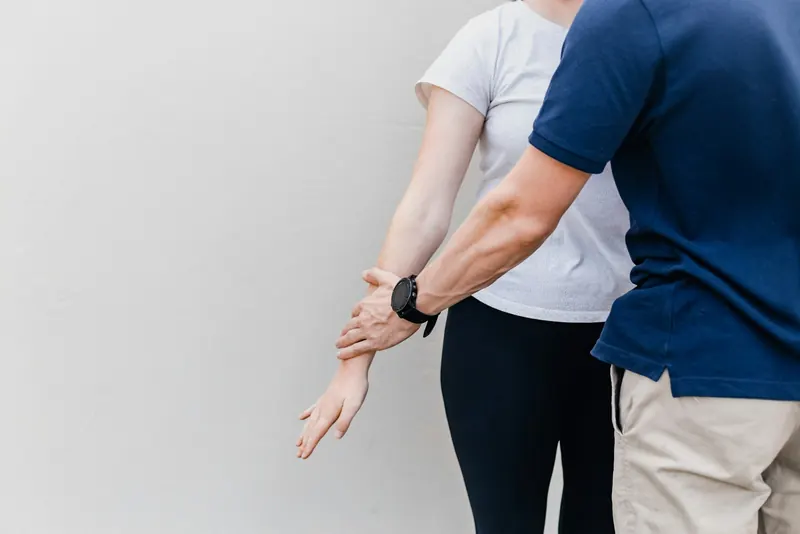
Grace starts with your history and observes how you move. NKT uses manual muscle testing: you hold a position while light pressure is applied, and the response is used as one input to explore how muscles may be coordinating.
Muscle testing is never treated as a diagnosis. Research shows that manual muscle-testing methods vary, so it's one piece of information among many. Based on the whole picture, you'll learn home exercises to practice new movement options.
NKT compared with other approaches
| Massage | Chiropractic | Physical therapy | NKT | |
|---|---|---|---|---|
| Typical focus | Soft-tissue tension | Joint mobility and alignment | Rehab, strength, function | How muscles coordinate and compensate |
| Assessment | Palpation, feedback | Exam, sometimes imaging | Clinical exam, movement tests | Movement observation plus manual muscle testing |
| Diagnoses conditions? | No | Yes (licensed DC) | Yes (licensed PT) | No. It's an assessment approach. |
| Between visits | Varies | Varies | Exercise program | Targeted home exercises |
These aren't either/or choices. NKT can sit alongside medical, rehabilitation, strength or manual-therapy care.
What NKT is not
NKT isn't a medical diagnosis, a cure, or a guarantee of a single root cause, and it doesn't repair damaged tissue. If you have new, severe, worsening, neurological or systemic symptoms, see a medical clinician first.
Research context
Promising research, carefully explained.
NKT is an approach that uses a particular assessment model to explore muscle coordination and movement. Research on pain science and motor control supports the broader idea that pain and movement can interact in complex ways. However, broad research on the nervous system is not the same as direct evidence for every NKT-specific claim. We aim to describe the evidence transparently and to distinguish published research from individual experiences.
NKT may be used alongside appropriate medical, rehabilitation, strength or manual-therapy care. It isn't presented here as a replacement for diagnosis or treatment.
A review of manual muscle-testing methods found that technique and reporting vary widely. That's why muscle testing is treated here as one assessment input, never a medical diagnosis.
Conable & Rosner, 2011What is NeuroKinetic Therapy?
NeuroKinetic Therapy® (NKT) is a movement assessment and treatment approach, developed by David Weinstock, that explores muscle coordination and movement patterns. A practitioner may use manual muscle testing, hands-on techniques, and targeted exercises as part of an individualized plan.
Is this massage?
Not exactly. Sessions are built around NeuroKinetic Therapy®, an assessment-led approach to how your muscles are coordinating. Hands-on techniques such as myofascial release, pressure point and neuromuscular work are used where the assessment shows they're needed, alongside gentle activation and home exercises. It's different from a relaxation or spa massage, and it isn't physical therapy, chiropractic or medical treatment.
Can NKT find the root cause of my pain?
Pain can have many contributing factors, and no single assessment can identify the cause of every person's symptoms. NKT may offer one way to explore movement patterns, but findings should be considered alongside your history, symptoms, function, and appropriate healthcare assessment.
How many sessions will I need?
There is no universal number. Your plan is guided by your goals, how you respond, and ongoing reassessment rather than a guaranteed session count.
SF Bay Area & Birmingham area · By appointment
Explore whether NKT may be a fit for your goals.
Send a quick request with a few days and times that work for you. Grace will reach out to confirm. Sessions are $100, paid in person.